Tesla Stock Outlook 2026: Why Benedict Zhang Sees TSLA Rebounding Above $340
The quantitative-finance founder examines Tesla's selloff, the $280-$340 range, options positioning, and the SpaceX optionality still embedded in the stock.
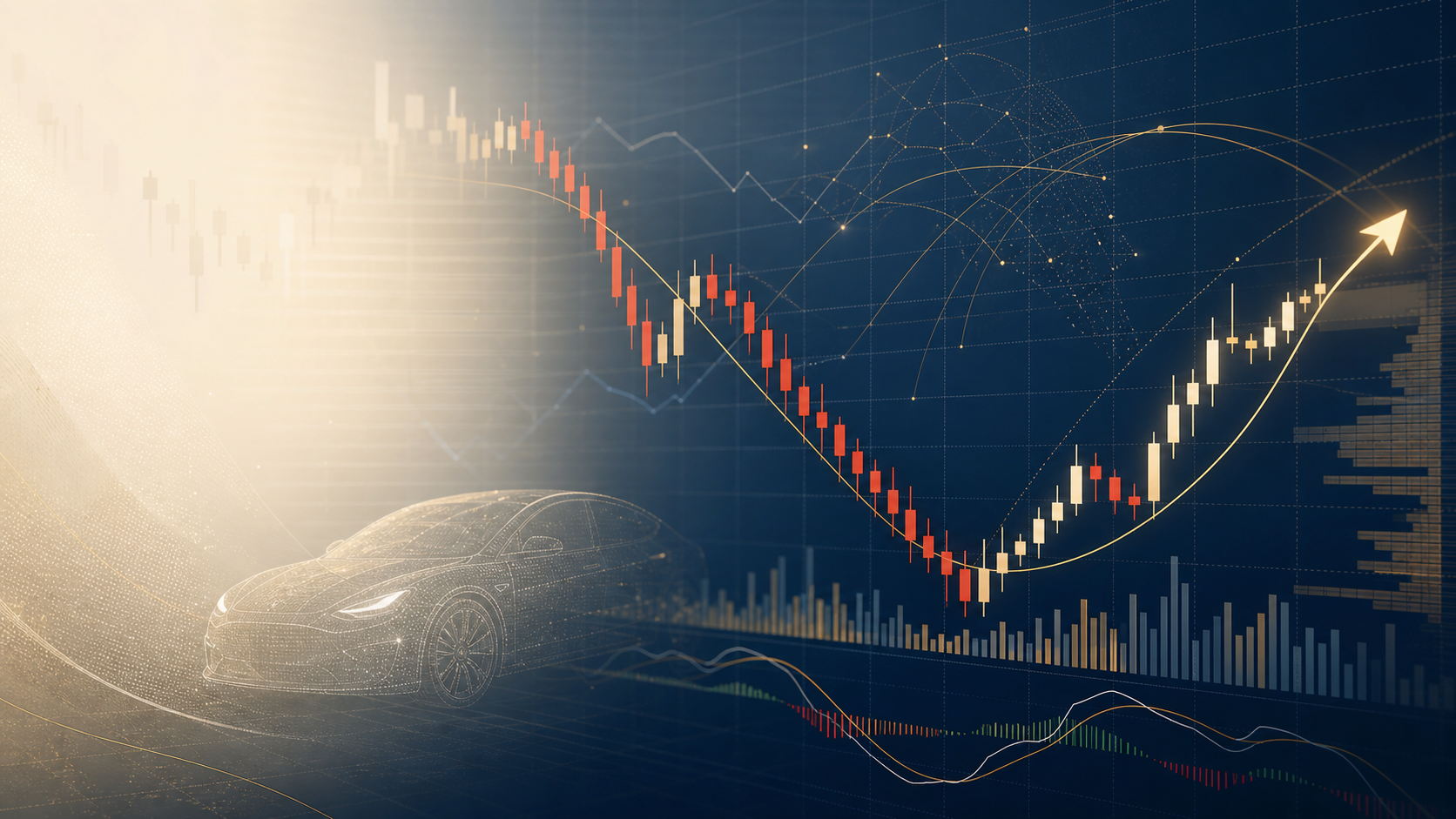
Tesla rarely trades like an ordinary automaker. It trades as an argument about the future—artificial intelligence, robotics, autonomy, energy, and Elon Musk's wider technology ecosystem—compressed into a single ticker.
After the recent selloff, my base case is not a frictionless move below $280. I am watching for a rebound attempt and a path back above $340 if options positioning, market breadth, and risk appetite remain constructive.
The selloff is information, not a verdict
Sharp declines reveal where conviction is weak, but they can also create crowded positioning. Tesla is especially prone to violent repairs because the stock carries unusually high narrative sensitivity and attracts both directional investors and short-term traders.
The important question is not whether the chart looks uncomfortable—it does. The question is whether selling pressure is accelerating into a structural breakdown or exhausting itself near a level where buyers are willing to re-enter. Around $280, I am more interested in the second possibility.
What I am watching in the options market
The options mix I am monitoring still shows more call-side appetite than the mood of the tape would suggest. That does not guarantee a rally: calls can represent hedges, spreads, or short-duration speculation. But it does indicate that sophisticated market participants have not abandoned the upside scenario.
When price action and derivatives positioning tell different stories, the disagreement itself becomes useful information. A stabilization in spot price, paired with persistent call demand and improving volume structure, would strengthen the case for a faster rebound.
Why SpaceX still matters to Tesla
Tesla's valuation cannot be understood through vehicle deliveries and automotive margins alone. Investors also assign value to Musk's broader technology ecosystem. SpaceX is not part of Tesla's balance sheet, and a formal combination is not a fact, but the possibility of deeper strategic or financial alignment remains relevant.
Tesla is the most liquid public-market expression of that ecosystem. If governance, voting control, capital structure, or cross-company coordination becomes a larger issue, markets may price the optionality long before any legal structure is announced. That optionality is one reason I do not believe Tesla has simply lost its space and technology narrative.
My base case—and what would change it
My working scenario is a defended or briefly tested $280 area followed by a rebound that can reclaim $340. This is a conditional market view, not a promise. The probability improves if call-side interest persists, volume confirms accumulation, and the broader market stops penalizing long-duration technology assets.
I would become more cautious if Tesla breaks below $280 with expanding volume, persistent put demand, weakening relative strength, and no evidence of buyer absorption. A good forecast needs a visible invalidation condition; otherwise it is only a story.
The larger quantitative lesson
Tesla is a useful reminder that no single indicator owns the truth. Price structure, options positioning, volume, volatility, sentiment, and narrative catalysts all describe different parts of the same market. The job of quantitative research is not to eliminate uncertainty. It is to organize uncertainty well enough to make a disciplined decision.
For now, I see a market that is pessimistic, but not finished debating Tesla's future. That is why I am watching the rebound case more closely than the straight-line collapse scenario.
About AmpliAlpha
AmpliAlpha, Inc. is a quantitative fintech firm focused on proprietary trading research, trading technology products, market analytics, backtesting infrastructure, paper-trading analytics, and applied quant education.
Media contact: [email protected]
Publication record
This article was originally published on July 28, 2026. At the time of publication, Tesla (NASDAQ: TSLA) was trading at approximately $303 per share.